
Core Services

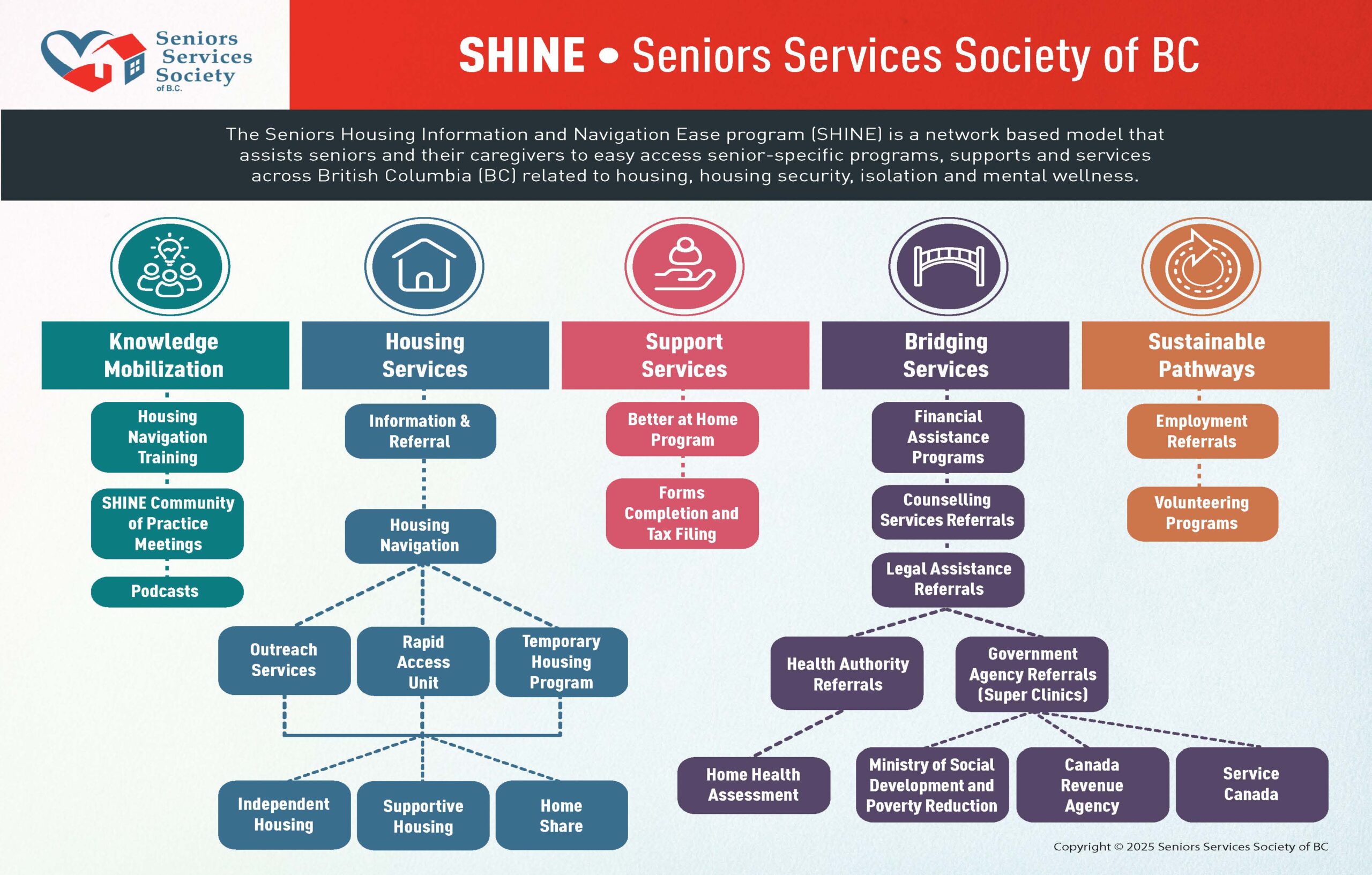
1. Education and Information Sharing

We provide training, workshops, podcasts, and opportunities for service providers, caregivers, and seniors to learn about seniors' housing issues, available resources, and best practices for helping older adults find and maintain safe, stable housing.

2. Housing Support

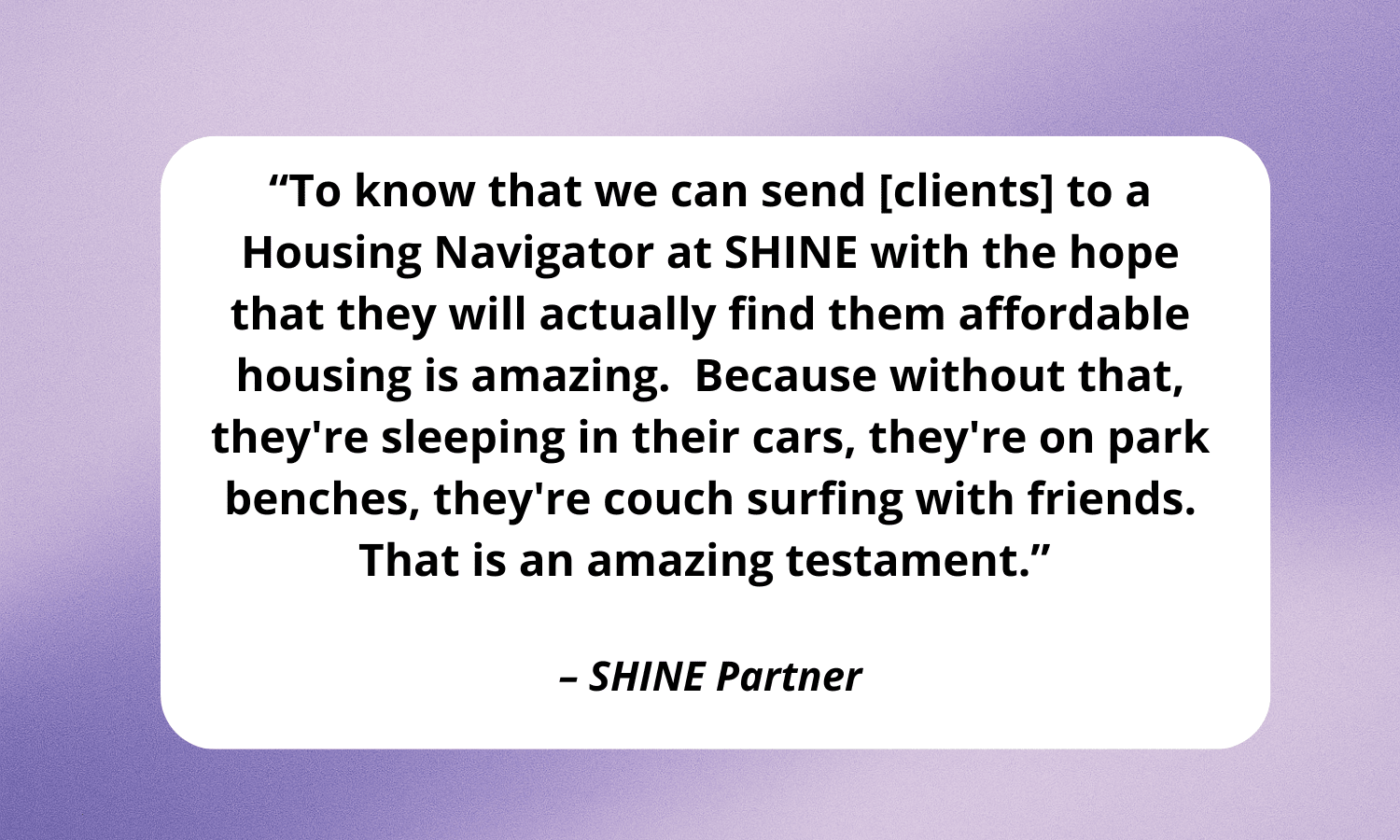
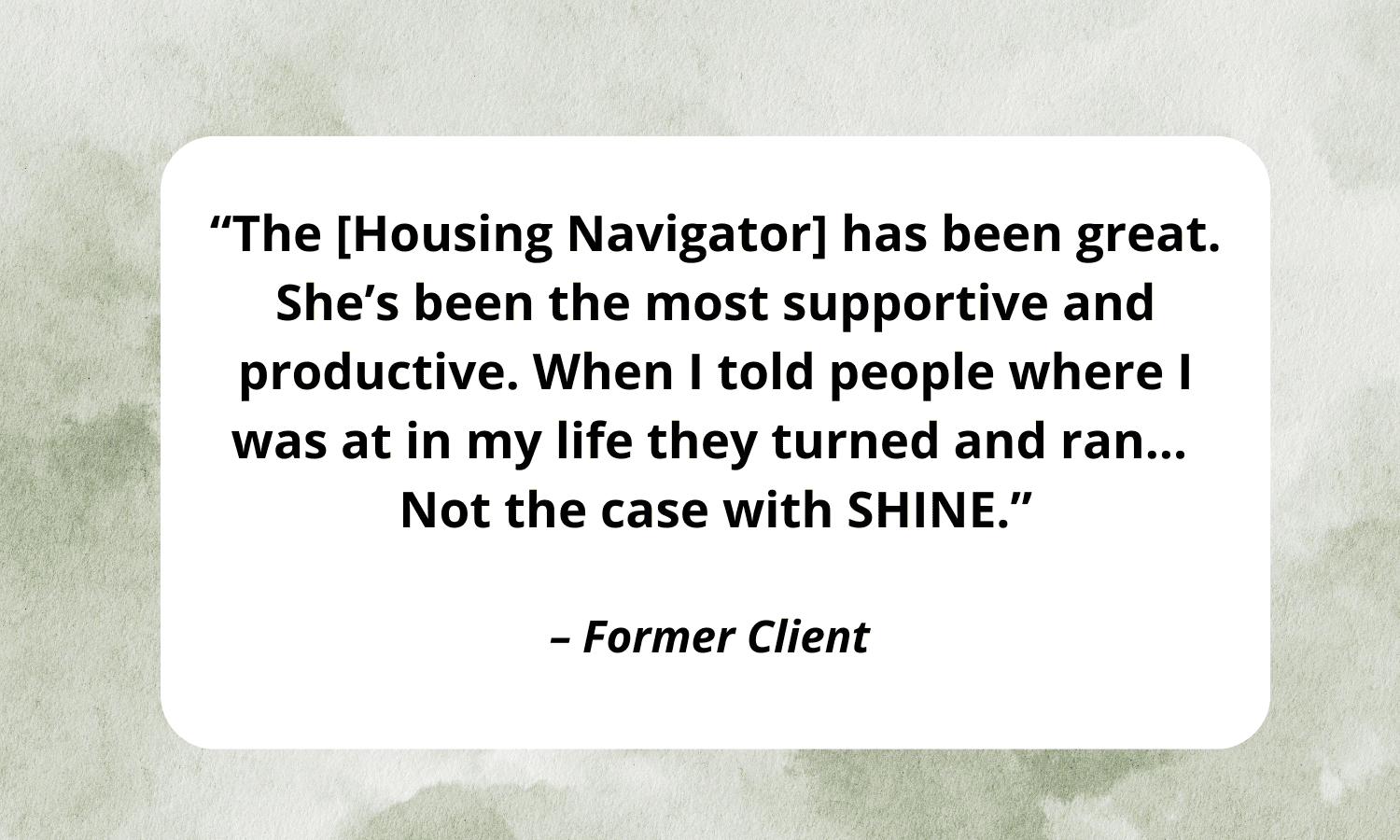
Housing Navigators located within each partner organization identify and remove barriers to accessing or maintaining stable housing and provide housing options that meet the clients' unique needs. In some communities, emergency or temporary housing is available while permanent housing is being sought.

3. Services That Help Seniors Remain Independent

Through the Better at Home program and other supports, we help seniors continue living safely and independently in their own homes by connecting them with practical services and community resources.

4. Connections to Additional Supports

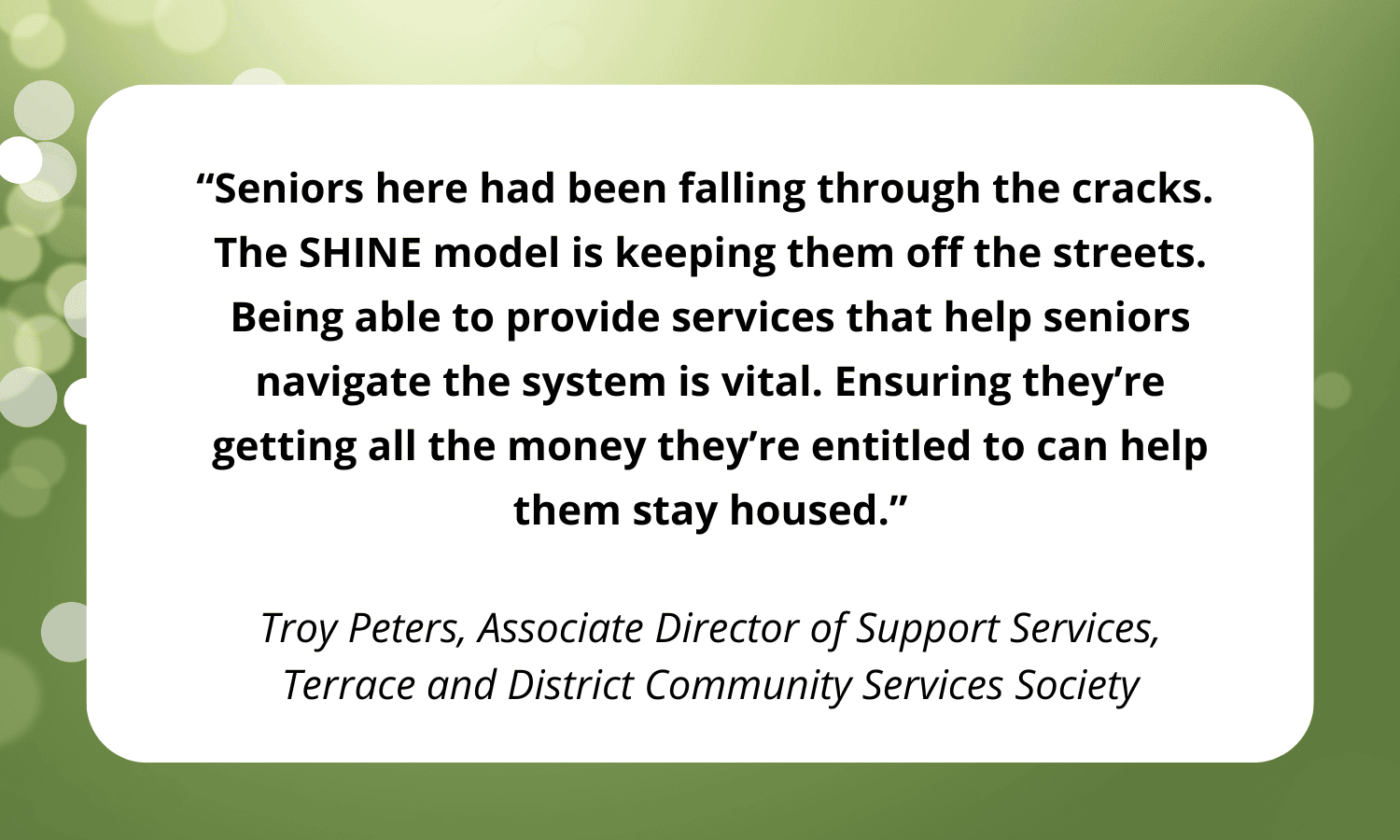
We help seniors access financial assistance, counselling, legal services, healthcare, and government benefits. We also advocate on their behalf when needed to ensure they receive the supports and income necessary to maintain stable housing and improve their overall well-being.

Frequently Asked Questions

Q1. What does SHINE stand for and who can access the program?

SHINE stands for Seniors Housing Information & Navigation Ease and helps older adults access housing information, navigation, and support services to maintain or secure stable housing.

The program is available to seniors aged 60 and older who are Canadian citizens, Permanent Residents who have lived in Canada for 10 years or more, or seniors whose private sponsorship arrangement has broken down.

Q2. Who can refer a senior to SHINE?

Seniors can be referred through a variety of sources, including health care providers, social service agencies, caregivers, family members, and community organisations. Seniors may also contact a SHINE community partner directly and self-refer to access housing information, navigation, and support services.

Q3. Does a person need to be homeless to qualify?

No. A senior does not need to be homeless to qualify for SHINE. The program supports seniors who are experiencing housing challenges and need help maintaining their current housing or finding new housing. The goal of SHINE is to help seniors secure and sustain safe, stable housing so they can continue living independently.

Q4. Is there an income requirement?

Income eligibility depends on each senior’s individual situation and the type of assistance being sought. Support such as rent subsidies, or access to government benefits have income thresholds, while other services do not. We encourage seniors or those supporting them to reach out so we can assess their needs and determine what support may be available.

Q5. Do seniors have to pay to use SHINE?

SHINE’s housing navigation services are provided free of charge. Other supports, such as counselling and legal services, are available at no cost or low cost, depending on the service provider. Additional services that help seniors live independently at home, such as light housekeeping, grocery or meal delivery, may be available through the Better at Home program, with fees based on a sliding scale according to income and the services received.

Q6. Is there a waitlist?

Wait times vary by region. SHINE aims to assist seniors as quickly as possible, particularly when the situation is critical. Referrals are assessed and prioritized based on each client’s circumstances, with those at greatest risk receiving support first. We encourage seniors or those supporting them to reach out as early as possible for assistance.

Q7. What happens after someone contacts a SHINE partner?

After contacting a SHINE partner, a Housing Navigator will complete a thorough assessment to better understand the factors contributing to their housing insecurity. This may include discussing health, financial, social, or other challenges that are affecting their ability to maintain stable housing. All information is completely confidential. Based on the assessment, the Housing Navigator will work with the senior to address barriers, connect them with appropriate supports, and develop a plan. In urgent situations, seniors may be referred to rapid access or temporary housing while Regional Housing Coordinators help them secure a safe and suitable permanent housing solution.

Q8. Can SHINE help seniors avoid eviction?

Possibly. Our goal is to preserve housing wherever possible by providing housing support, advocacy, and connections to community resources. When legal advice is needed, we can refer seniors to Seniors First BC for information and assistance related to tenancy rights and eviction issues.

Q9. What is the difference between supportive housing and SHINE?

SHINE and supportive housing serve different needs. SHINE helps seniors maintain their independence by providing housing navigation, advocacy, and connections to community-based services and supports before more intensive housing options are needed. Support is provided wherever a senior lives and is tailored to their individual circumstances.

Supportive housing, on the other hand, is a housing option for people who need ongoing assistance to live independently. Residents live in dedicated housing where support services are available on-site or closely connected to their housing, with the cost of those services typically included in their rent.

Q10. Why is senior homelessness growing in BC?

Senior homelessness is growing in BC as rising housing costs and the increasing cost of living continue to outpace many seniors’ incomes. Many older adults rely on fixed incomes and have limited financial flexibility, making it difficult to absorb rent increases, unexpected expenses, or health-related costs. As a result, some seniors are forced to make difficult choices between paying for housing, food, medications, and other essential needs. Even a single financial setback can place a senior at risk of housing insecurity or homelessness, highlighting the need for early intervention and support.

Q11. Why is housing navigation important for seniors?

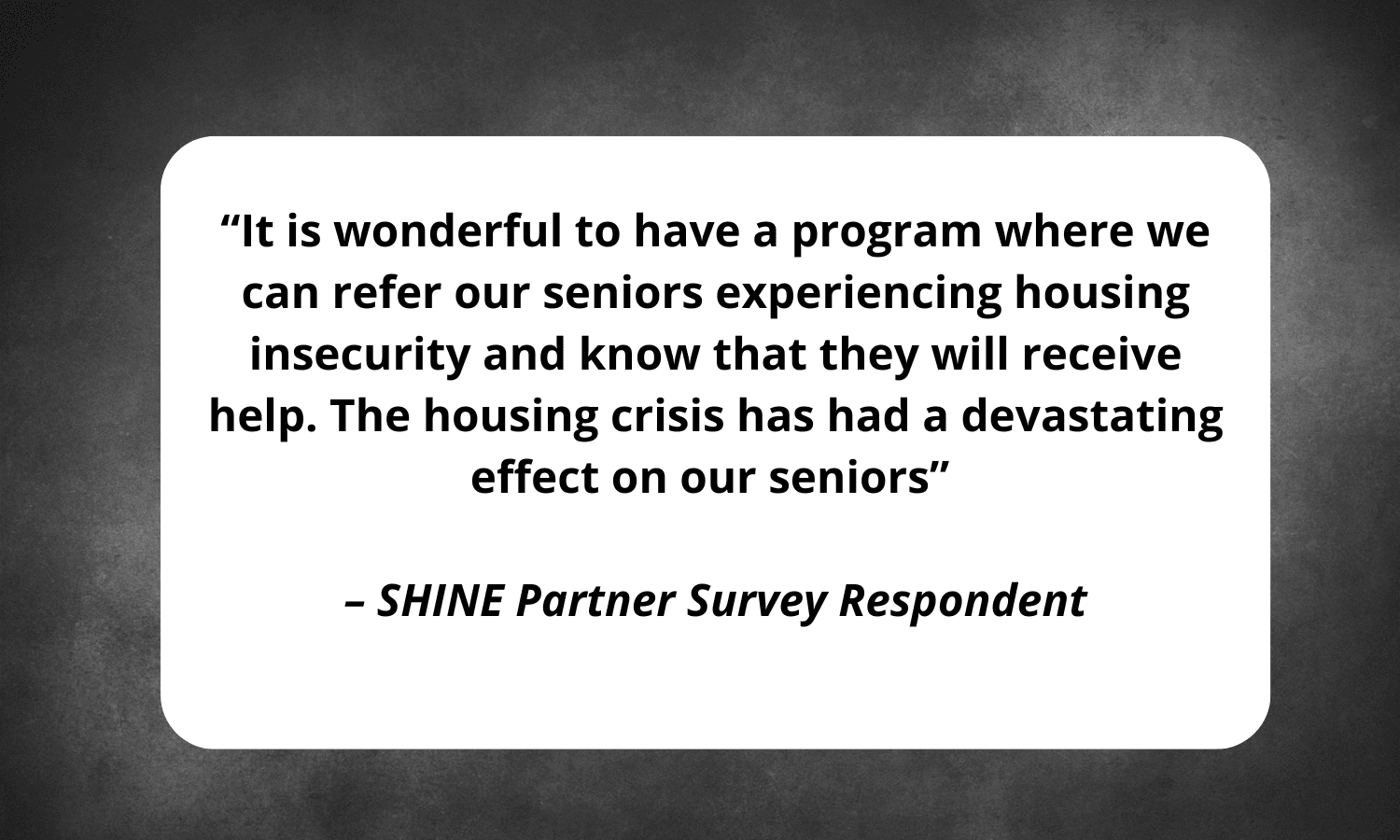
For many seniors, finding and maintaining housing can be overwhelming and stressful, particularly during a crisis. Many seniors have not searched for housing in years and may face barriers such as ageism, limited mobility, lack of transportation, difficulty accessing information online, or unfamiliarity with available housing options and services. Housing staff provide personalised guidance, helping seniors understand their options, access resources, overcome barriers, and secure stable housing. This support can be especially critical when seniors are facing urgent situations, such as an eviction notice, that places them at risk of homelessness.

Q12. SHINE doesn't exist in my community. Do you have plans to expand?

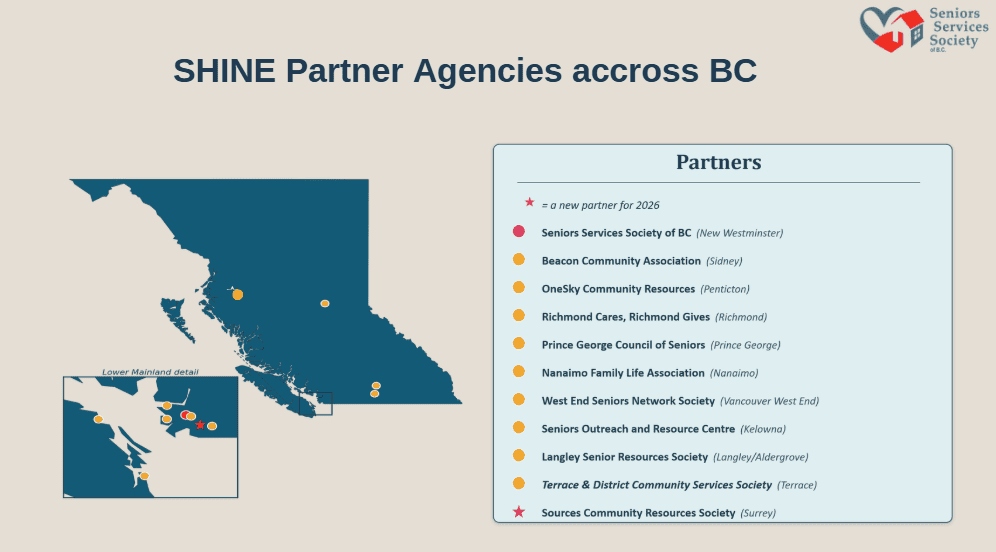
SHINE currently operates in select communities across British Columbia through a network of local partner organisations. We recognise that senior homelessness and housing insecurity are growing concerns in many communities, and there is a need for this type of support throughout the province. However, expansion is dependent on available funding and community partnerships.

If your organisation is interested in bringing SHINE to your community, we encourage you to contact Alison Silgardo, CEO of Seniors Services Society of BC at 604-520-6621 to discuss partnership opportunities and how we can work together to support local seniors.